stimulate those
TASTE BUDS
From fresh gourmet mushrooms to freeze-dried powders, find recipes and prep guidance that maximize flavor and function.

Mushroom Recipe Collections
-
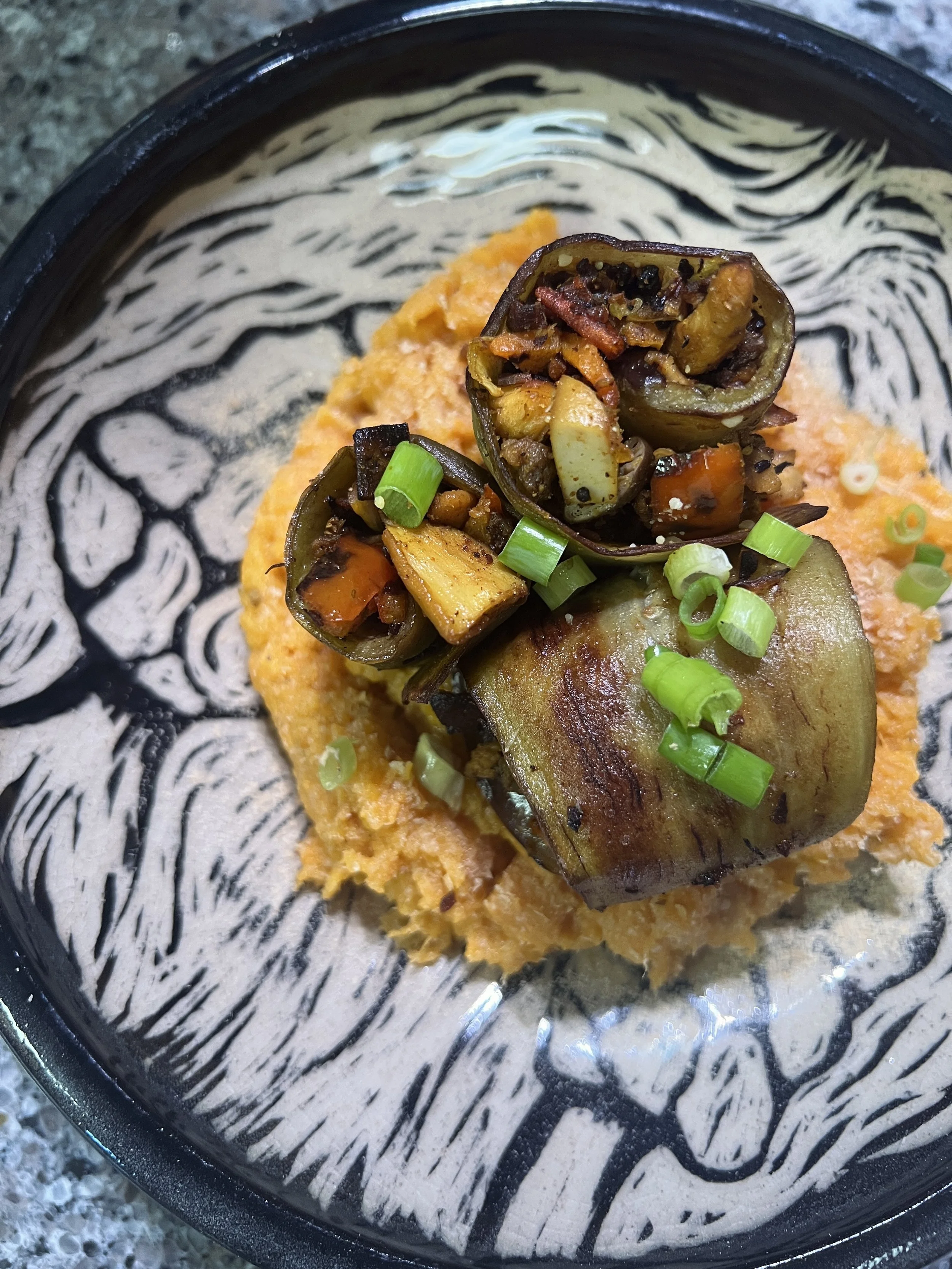
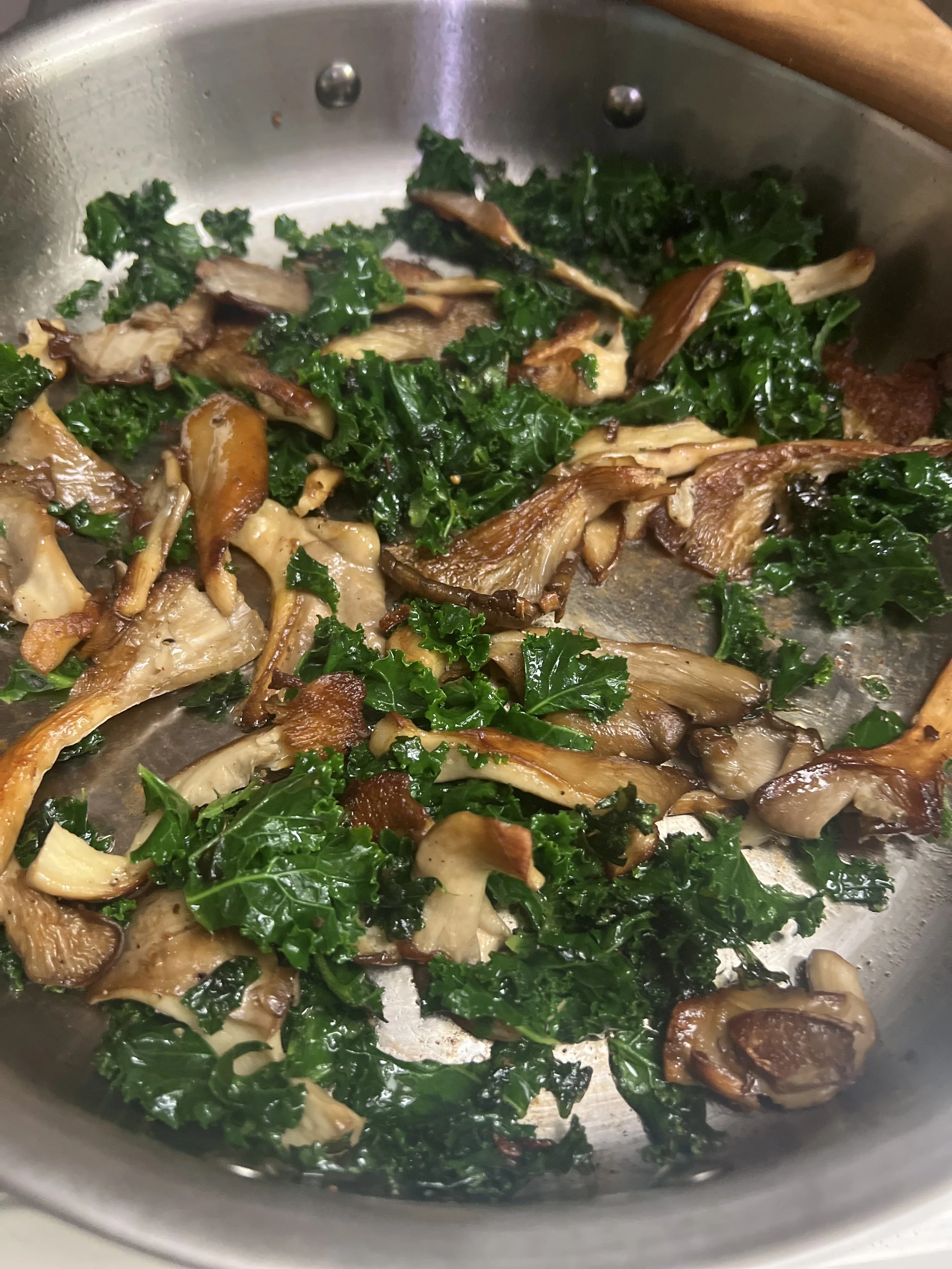
![Featuring tender & delicate mushroom recipes that pack a flavor punch with an image example Myzel Risin' Fresh Gourmet Italian Oyster Mushroom Sauté with and Kale]()
Tender & Delicate
Delicate, soft-textured, quick-cooking mushrooms. Often absorb flavors well. Great for searing, sautéing, or seafood substitution.
Examples: Lion’s Mane, Bear’s Head Tooth, Coral Tooth, Italian Oyster, Snow Oyster, Maitake
-
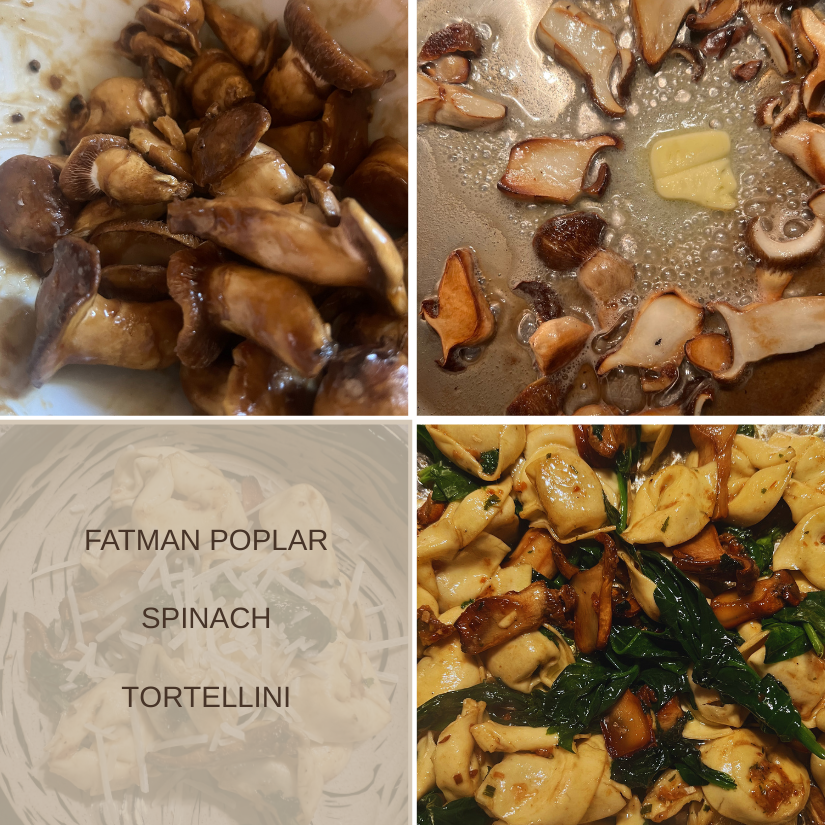
![Featuring hearty & meaty mushroom recipes for those hit the spot recipes with an image example of Myzel Risin' Fresh Gourmet Fatman Poplar mushrooms marinated in a homemade sauce]()
Hearty & Meaty
Thick, umami-rich mushrooms that hold their shape and chew like meat. Ideal for grilling, roasting, and hearty mains.
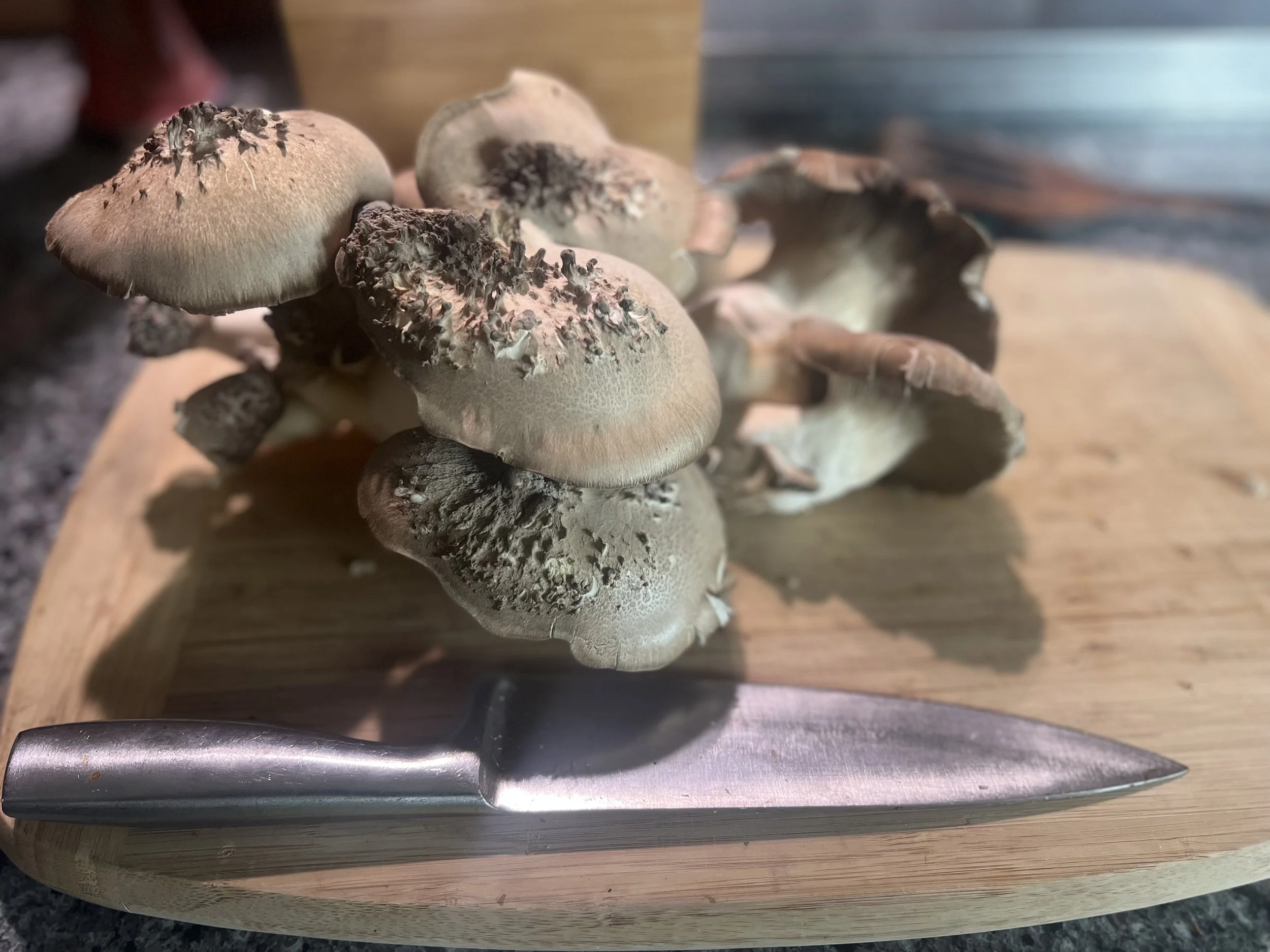
Examples: King Trumpet, Black Oyster, Blue Oyster, Fat Man Poplar, Shiitake
-
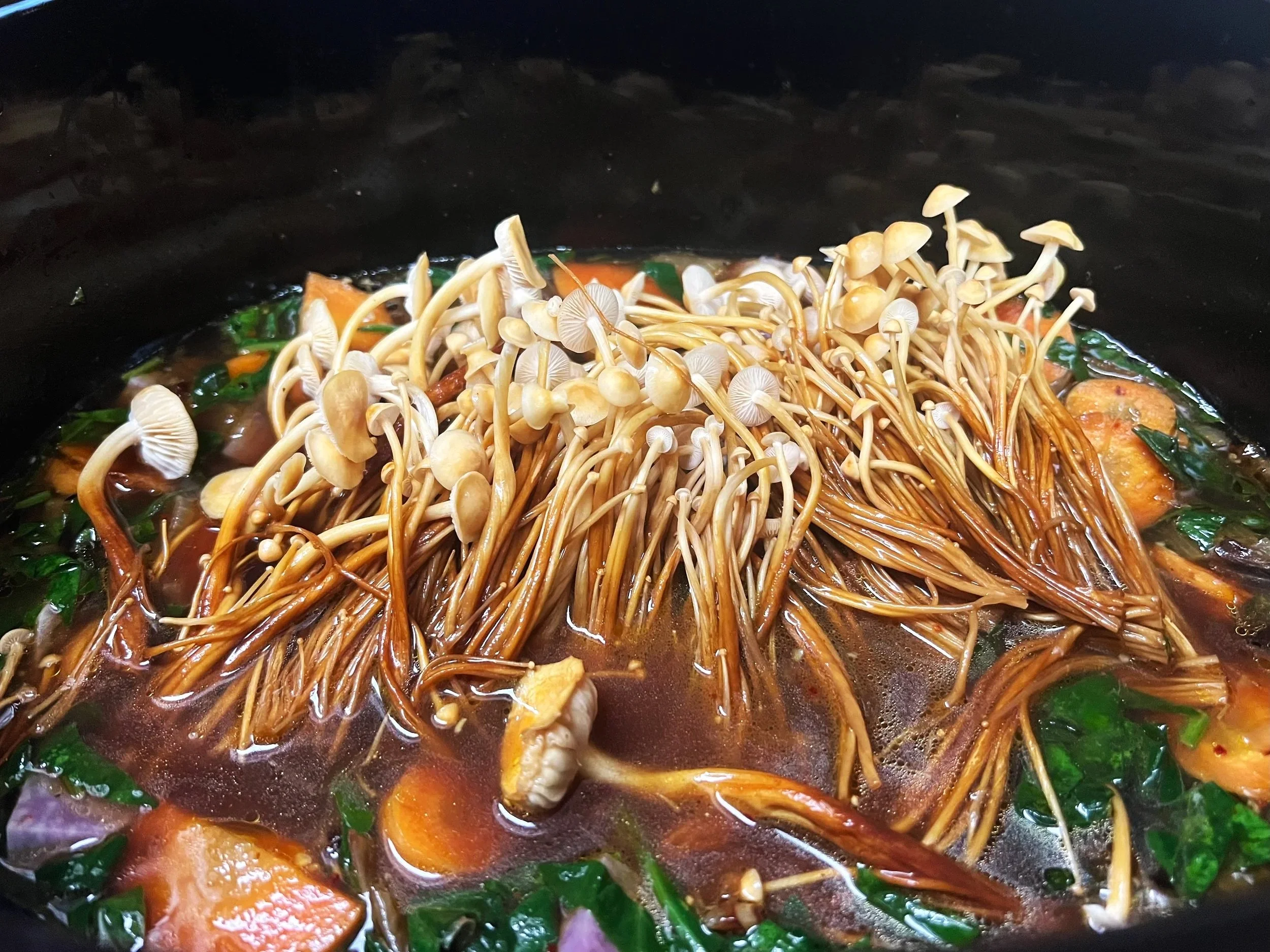
![Featuring versatile & crisp mushroom recipes for snappier mush with an image example of Myzel Risin' Fresh Gourmet Gold Enoki noodle stew]()
Versatile & Crisp
Tender stem-forward mushrooms that stay firm in soups and stir-fries. Perfect for texture and snap in any dish.
Examples: Pioppino, Enoki, Chestnut

Featured Recipe: Lobster Rolls
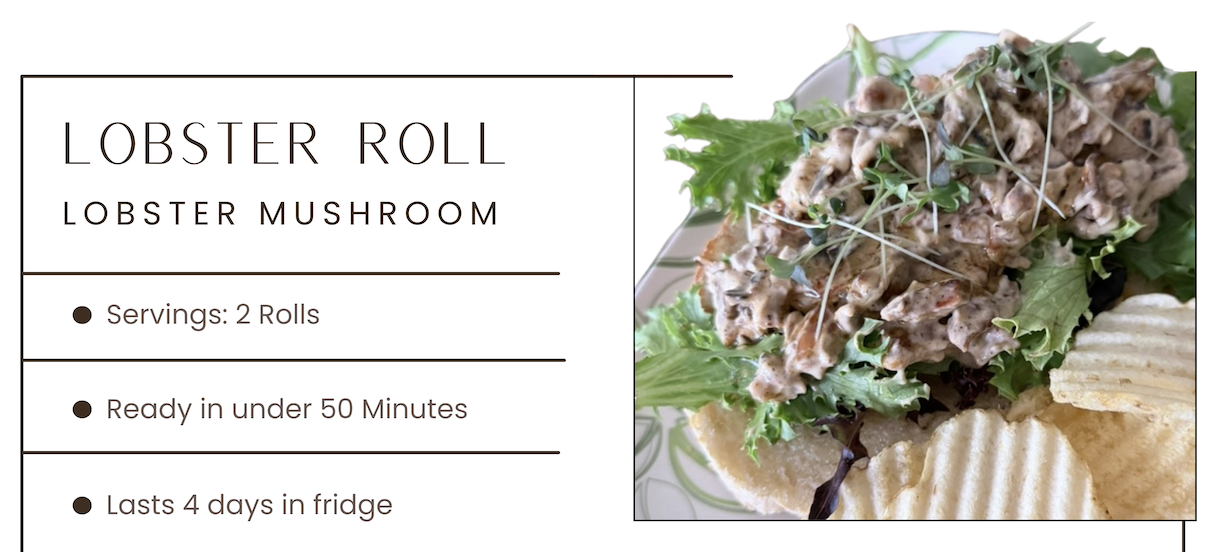
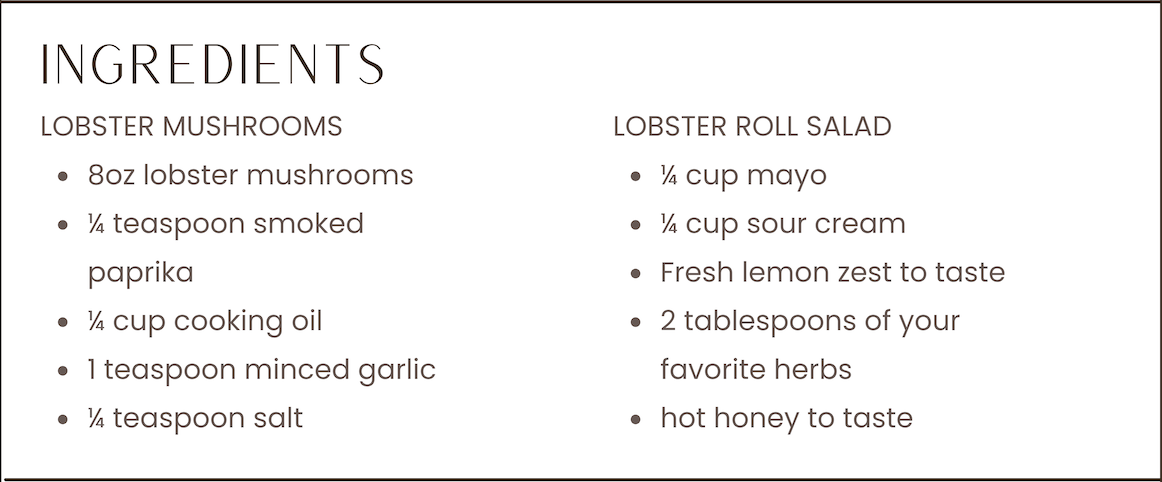
You won’t find any sea-sourced lobsters in this roll.
Made with wild Lobster Mushrooms, their sweet texture will have you wondering how any meat is missing. Follow the simple steps below and adapt the slaw to your liking. Click the link below for more detailed tips and a full-recipe outline!
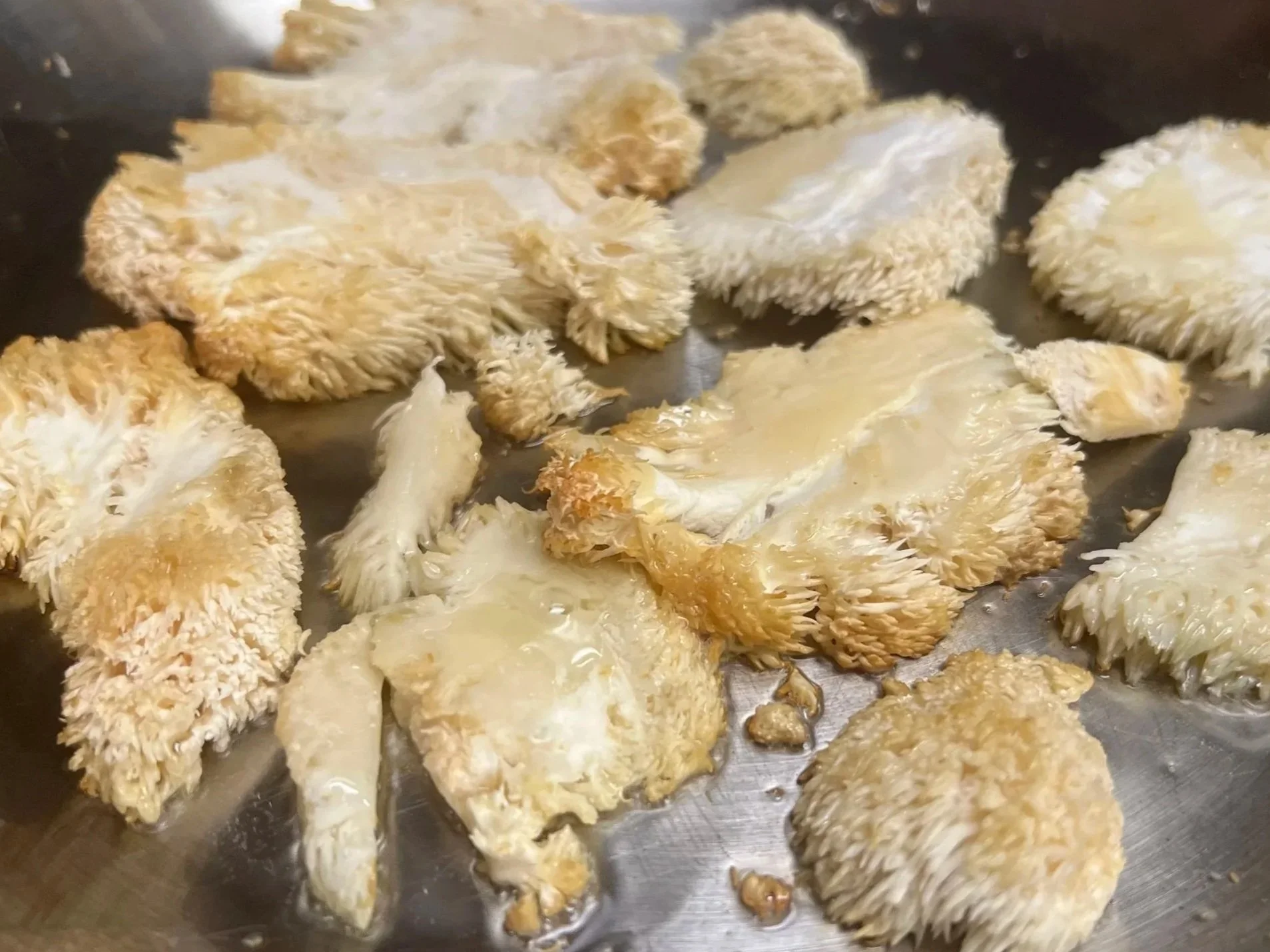
Sweat the mushrooms in oil and salt on med-high heat for 15 mins
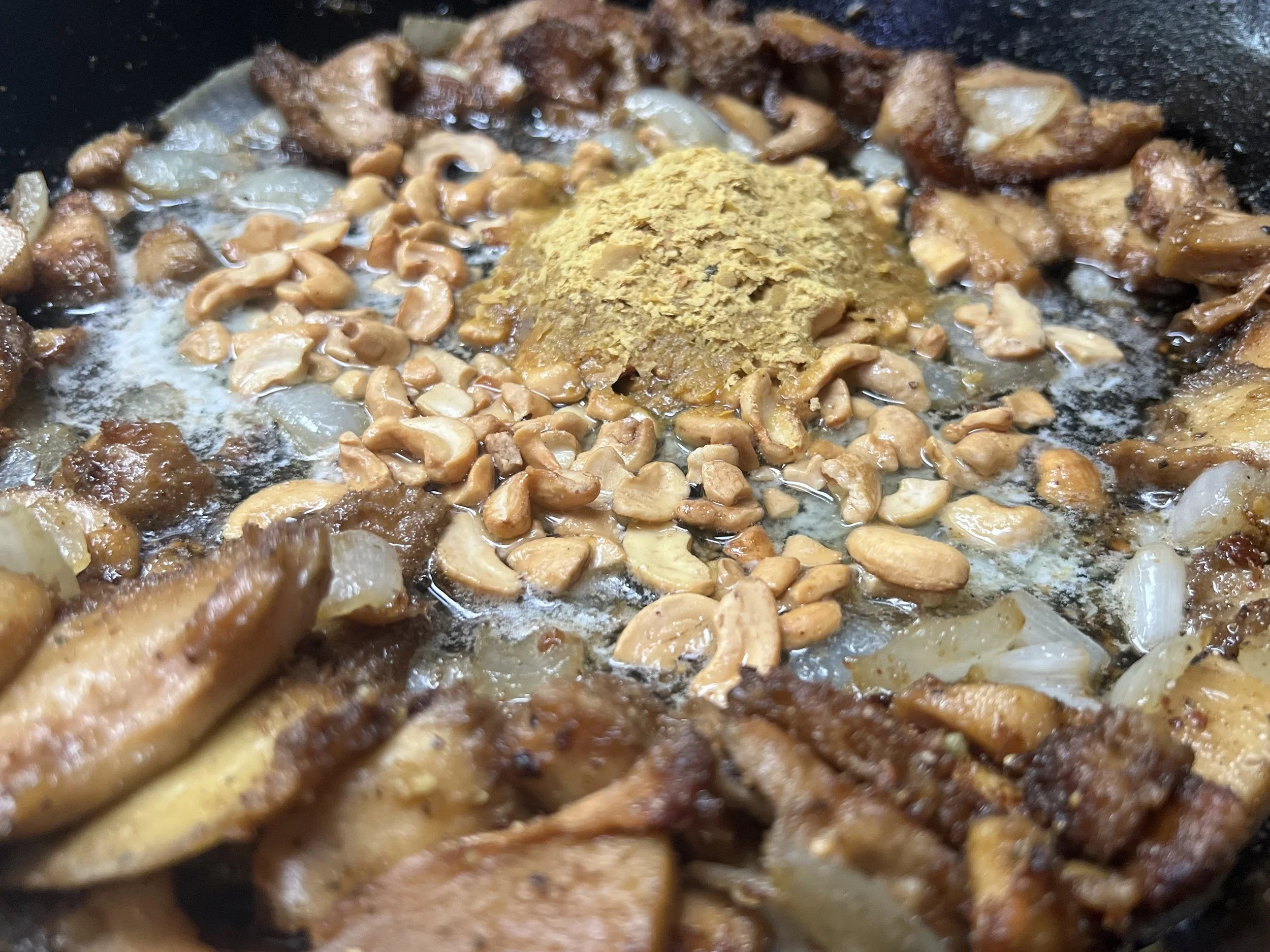
Add the garlic and smoked paprika, stir until golden brown
Transfer to a bowl & cool the mushrooms
Toss cool mushrooms with lobster roll salad ingredients
Season to taste
Toast your buns or bread slices before loading
Top with microgreens and a drizzle of hot honey
Culinary Mushroom Basics
-
Q: What’s the best way to store mushrooms?
Let’s talk fresh. To keep your mushrooms fresh for up to 5–7 days, store them in the compostable box they arrived in, and place that box in the refrigerator away from direct airflow (such as fans or cooling vents). This helps prevent drying out while allowing a bit of airflow—mushrooms don’t like to be sealed in plastic or suffocated in airtight containers when fresh.
For Everything Else
Freeze-Dried Mushrooms
Keep sealed in the original mylar bag and store in a cool, dark place. Thanks to the included oxygen absorbers, unopened bags can remain shelf-stable for 25–30 years when stored under these ideal conditions noted above.
Once opened, we recommend using within 6–12 months for optimal taste and potency.
Avoid: humidity, heat, light, & refrigerators (unless vacuum sealed)
Storage: dry indoor pantry
Roasted Mushroom Powder
Keep sealed in its original glass jar or an airtight container and store in a cool, dark place. Thanks to the freeze-drying process, unopened jars can maintain shelf-stability for up to 25–30 years under ideal conditions.
Once opened, we recommend using within 6–12 months to enjoy peak flavor and potency.
Avoid: humidity, heat, light
Storage: dry indoor pantry
Tinctures & Extracts
If you’re curious…yes, these are used in the kitchen too. Creative Mixologists love crafting unique drinks with them!
These are shelf-stable for up to 2 years. No refrigeration required—just keep away from direct sunlight or heat.
Once opened, we recommend using within 2 years.
Avoid: heat, direct sunlight
Storage: dry indoor pantry
-
Q: Do I need to clean fresh mushrooms?
Our mushrooms, unless wild foraged, do not need to be wiped down or ‘cleaned’. If you see small bits of substrate, wipe with a damp towel or brush off gently—avoid soaking to maintain texture. Though everything you receive is edible, trim the base if preferred and you’re good to go!
Q: What if I’m using freeze-dried mushrooms?
No need to clean these either! Our freeze-dried mushrooms are ready to rehydrate and cook. No rinsing or scrubbing necessary.
Q: How about the mushroom powders?
Powders are fully prepped—just scoop and use. Stir into broths, rub on proteins, blend into seasonings, or add to sauces.
-
Q: How many servings can ½ lb of fresh mushrooms make?
Fresh mushrooms are about 90% water, so they shrink significantly during cooking—often more than expected! Serving yield depends on how you cook them and the type of mushroom used, but here are some basic guidelines to help:
When sautéed or roasted to a golden, lightly crispy finish, mushrooms typically cook down by at least half in volume.
Meaty varieties like Black Oyster or King Trumpet retain more of their size and meaty texture.
Softer mushrooms such as Lion’s Mane, Bear’s Head Tooth, or Italian Oyster shrink more noticeably.
In general, ½ lb of fresh mushrooms yields about 1 to 1½ cups cooked—enough for 2–3 side portions or 1–2 entrée servings, depending on your recipe (or how much you love mush!).
Q: How much freeze-dried mushroom equals fresh?
On average, 1oz of freeze-dried = 6oz (just less than 1/2lb) fresh.
Rehydrate with warm water for 15–20 minutes, then cook as desired.
Q: How much powder should I use?
These culinary powders pack a serious flavor punch and should be used to taste
¼ to ½ teaspoon per serving is a great starting point for flavor.
For broths or sauces: start with up to 1 teaspoon per cup of liquid for richer depth
Q: Can I mix mushrooms in recipes?
Absolutely! Mixing mushroom species adds depth, umami, and complexity—just like layering spices or herbs. Whether you’re aiming for rich flavor, varied textures, or a boost in nutrition, blending different mushrooms enhances the magic on your plate.
-
Q: Are your mushrooms treated with preservatives?
Never. All of our mushrooms are 100% pure fruiting bodies, grown on certified organic substrate, and sustainably processed with no additives or fillers.
Q: Can I freeze mushrooms or powders?
We don’t recommend freezing fresh—moisture is an enemy of fresh and shelf-stable mushrooms. Keep fresh in the fridge and powders sealed in a dry indoor pantry.
If you wish to preserve left-overs in the freezer, ensure they are cooked at least ¾ of the way through to preserve texture.
Q: Can I dehydrate mushrooms?
Absolutely! Dehydrating is a great way to extend shelf life and preserve flavor—especially if you're saving extras from a market haul. However, the process can reduce nutritional value by 40% or more. If you’re aiming to retain nutrients, consider freeze-drying instead—or check out our freeze-dried varieties for a convenient, long-lasting option.
Q: What makes freeze-dried better than dehydrated?
Freeze-drying preserves up to 90% of nutrients and locks in flavor and texture. They rehydrate beautifully without becoming soggy or bland.
Tried & True Mushroom Preparation
Mushrooms can provide a wide range of culinary options given the variety of flavors and textures that accompany the different species of mushrooms. Being about 90% water, they cook down quite a bit but can be great carriers for different flavored sauces or marinades like BBQ or Worcestershire sauce. When cooking mushrooms for the first time, we like to experience the flavor and texture as true as possible
Sautéed Mushrooms
Mushrooms are incredible vessels for flavor—but if you want to truly experience the unique profile of each variety, this simple sauté is your go-to. Every mushroom brings its own nuance to the pan: textures, aromas, and natural umami.
Beyond the pure yum they deliver, this method helps build your palate and deepen your understanding of how each mushroom can elevate your dishes.
-
If time allows, you can intensify the flavor and break down chitin* by boiling the mushrooms for up to 10 minutes before you sauté.
*Chitin: component within the cell walls that provide structural support - high in dietary fiber and beta-glucans, but can leave some tummies feeling sad after consumption.
-
Q: What oil do I use to cook mushrooms?
We recommend medium to high heat when cooking mushrooms, which makes your choice of oil especially important.
Avoid regular olive oil unless it's specifically labeled for high-heat cooking—it can turn bitter and affect your flavor. Instead, reach for oils with a high smoke point like avocado oil, ghee, or a neutral high-heat cooking oil.
Butter is delicious too—rich and flavorful—but it burns quickly. If using butter, keep a close eye on your cook or pair it with a high-heat oil and add it toward the end of cooking to enhance taste without burning.
-
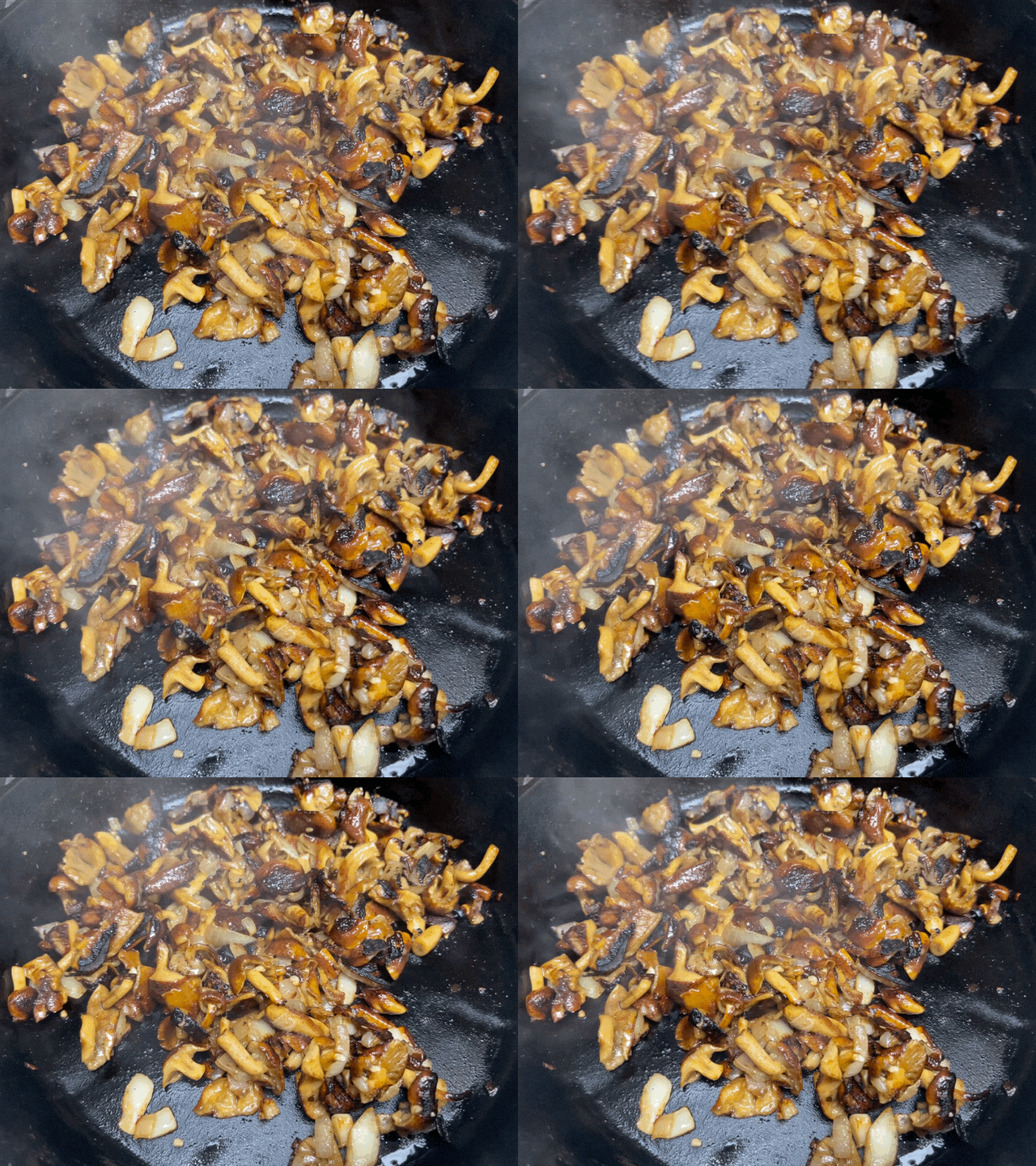
Cut/chop mushrooms into 1/8-1/4” thickness.
Add 1 teaspoon (we usually add more) of butter/oil to the pan on medium/high heat.
Once melted, add mushrooms and toss until coated with butter/oil. Sauté until golden brown, then flip and cook until golden brown on the other side.
Yum!
Roasted Mushrooms
One of our personal favs, roasted mushrooms are both easy and incredibly flavorful. Whether using a conventional oven or air fryer, the goal is the same: golden, crispy perfection.
-
While most mushrooms can be roasted, some varieties hold up better to high heat. Meaty mushrooms like King Trumpet, Black or Blue Oysters, Enoki, and Pioppino are ideal—they crisp beautifully and keep a satisfying bite.
Tender varieties, like Lion’s Mane or Bear’s Head Tooth, can be roasted too but need more attention to avoid over-drying.
-
Fresh mushrooms are best for roasting, but if you only have dried, it’s possible!
Rehydrate freeze-dried mushrooms fully before roasting - transforming them closer to their original texture. Pat dry before cooking, and don’t overcrowd the pan to ensure even crisping.
Avoid: roasting frozen mushrooms directly, as the moisture can prevent browning.
-
Preheat oven or air fryer to 400°F (204°C).
Cut mushrooms to your preferred size for even cooking.
(Optional) Toss with oil, salt, and spices or herbs if desired. We often skip the oil—mushrooms already hold a lot of moisture and roast beautifully on their own.
Spread in a single layer on a baking sheet or air fryer basket for even crisping.
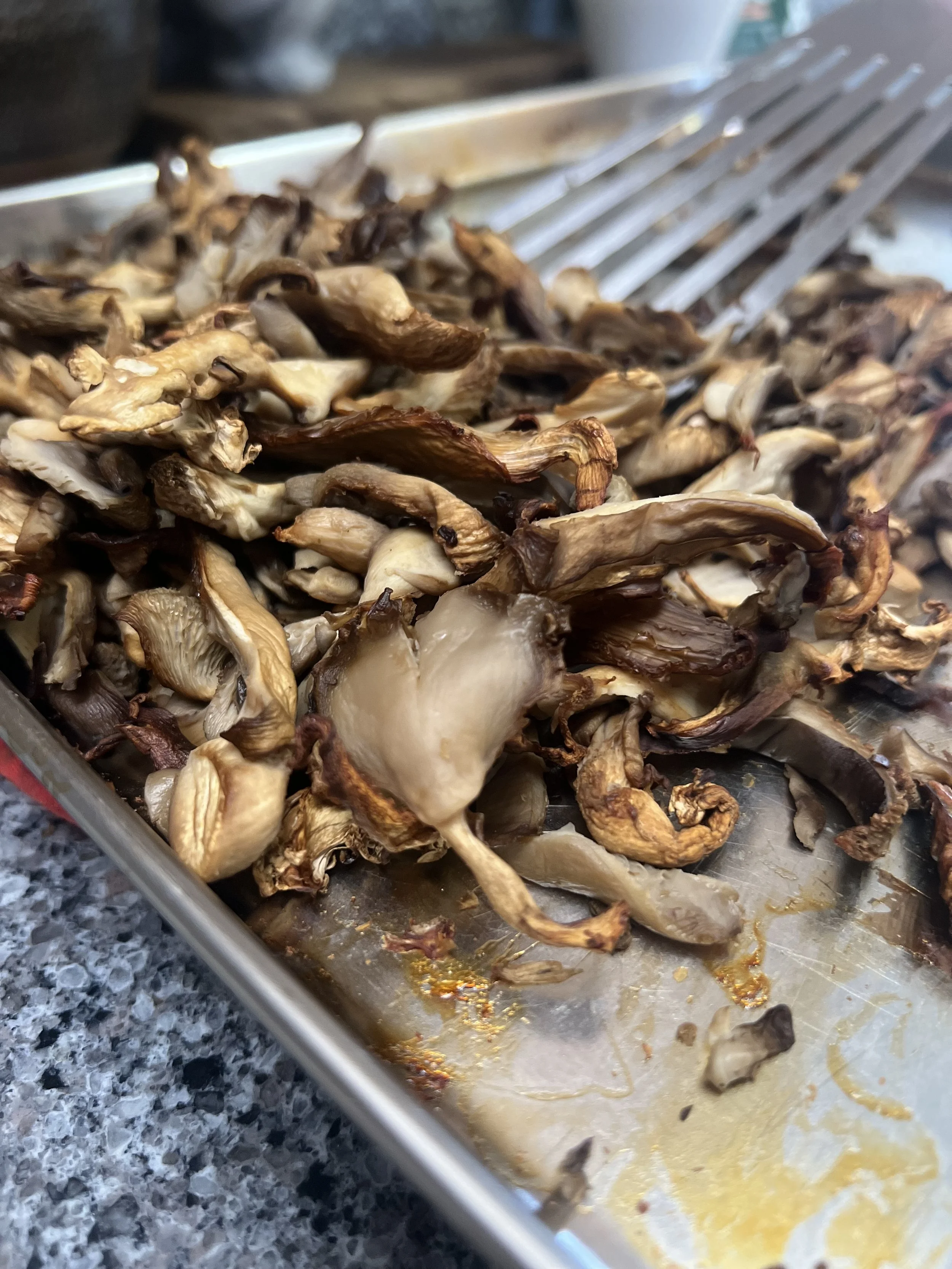
Roast for 20–30 minutes, flipping halfway through, until golden and lightly crispy on the edges.
Enjoy hot, or let cool and toss on a salad!
Store any leftovers in the fridge for up to 3 days.
Tender & Delicate Mushrooms
-
You won’t even know it’s mushrooms.
These lobster rolls are a quick and perfect weeknight meal and will have you grabbing for seconds.
Recipe from: Alan Bergo
Author: Alan
Vegetarian, Vegan Option
-
-
-
Turning a mushroom into a juicy, dense steak is simpler than you may think. With crisped edges and a charred taste, this bite will have you wondering why it took so long to try.
Lion’s Mane Steak
Recipe from: Derek Sarno
Author: Derek Sarno
Dairy Free, Vegetarian, Vegan Option
-
Cornmeal-Crusted Popcorn ‘Shrooms
Recipe from: Justine Snacks
Author: Justine Doiron
Dairy Free, Gluten Free, Vegetarian, Vegan option
-

Hearty & Meaty Mushrooms
-
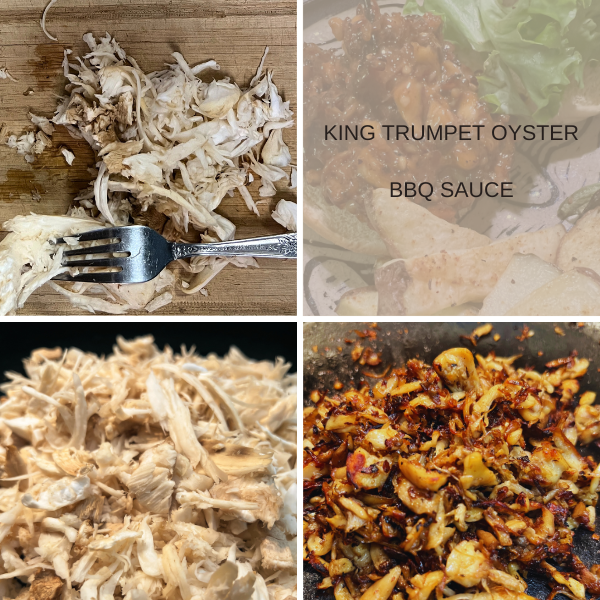
Marinated Grilled King Oyster (Trumpet) Mushroom Skewers
Recipe from: VegNew
Author: Nadine Horn & Jörg Mayer
Dairy Free, Gluten Free, Vegan
-
-
The Bloomin’ Oyster (w/Ramp Aioli)
Recipe from: Agrarian Feast
Author: Lucas Snobeck & Vincent Cuneo
Vegetarian
-
-
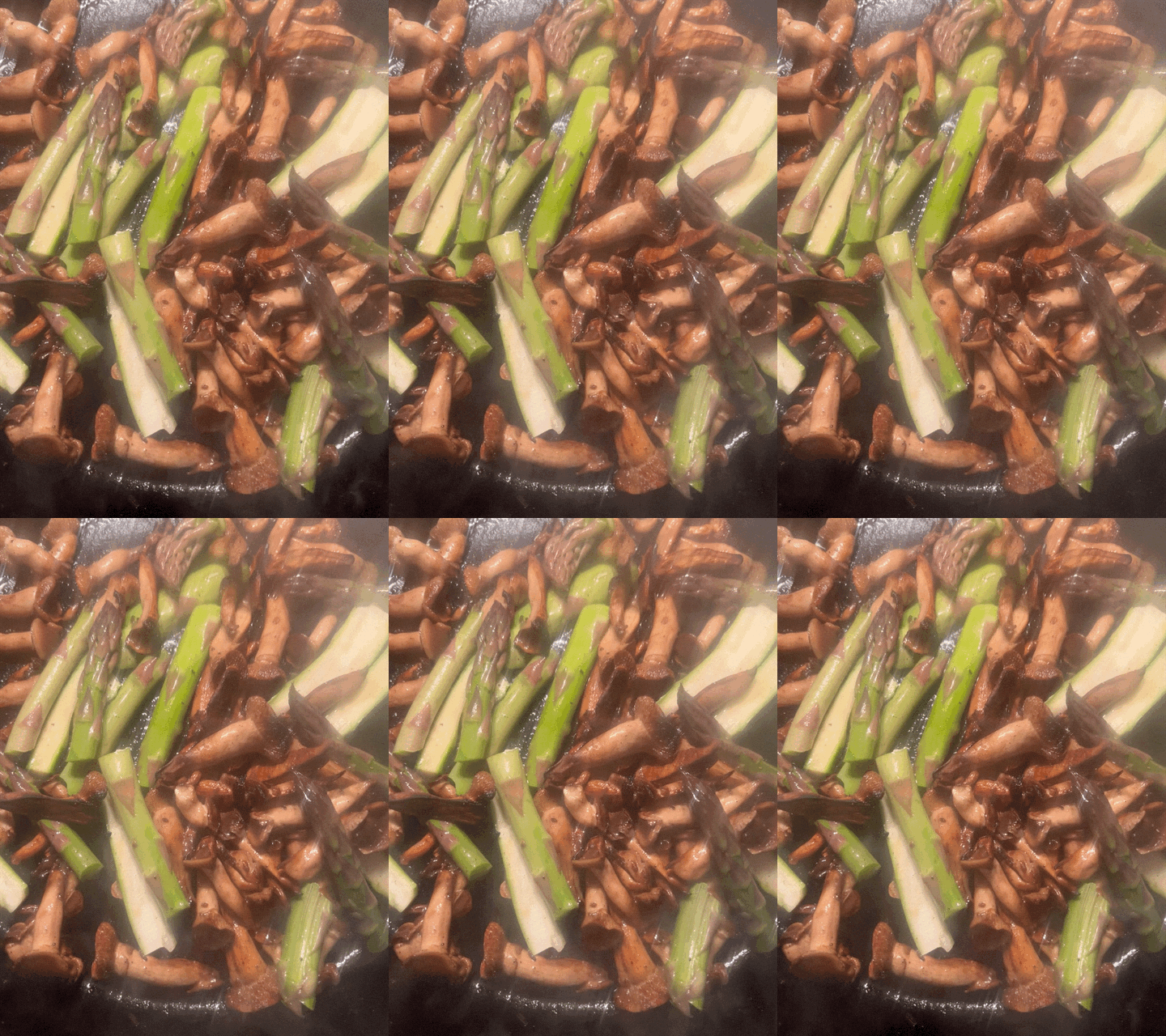
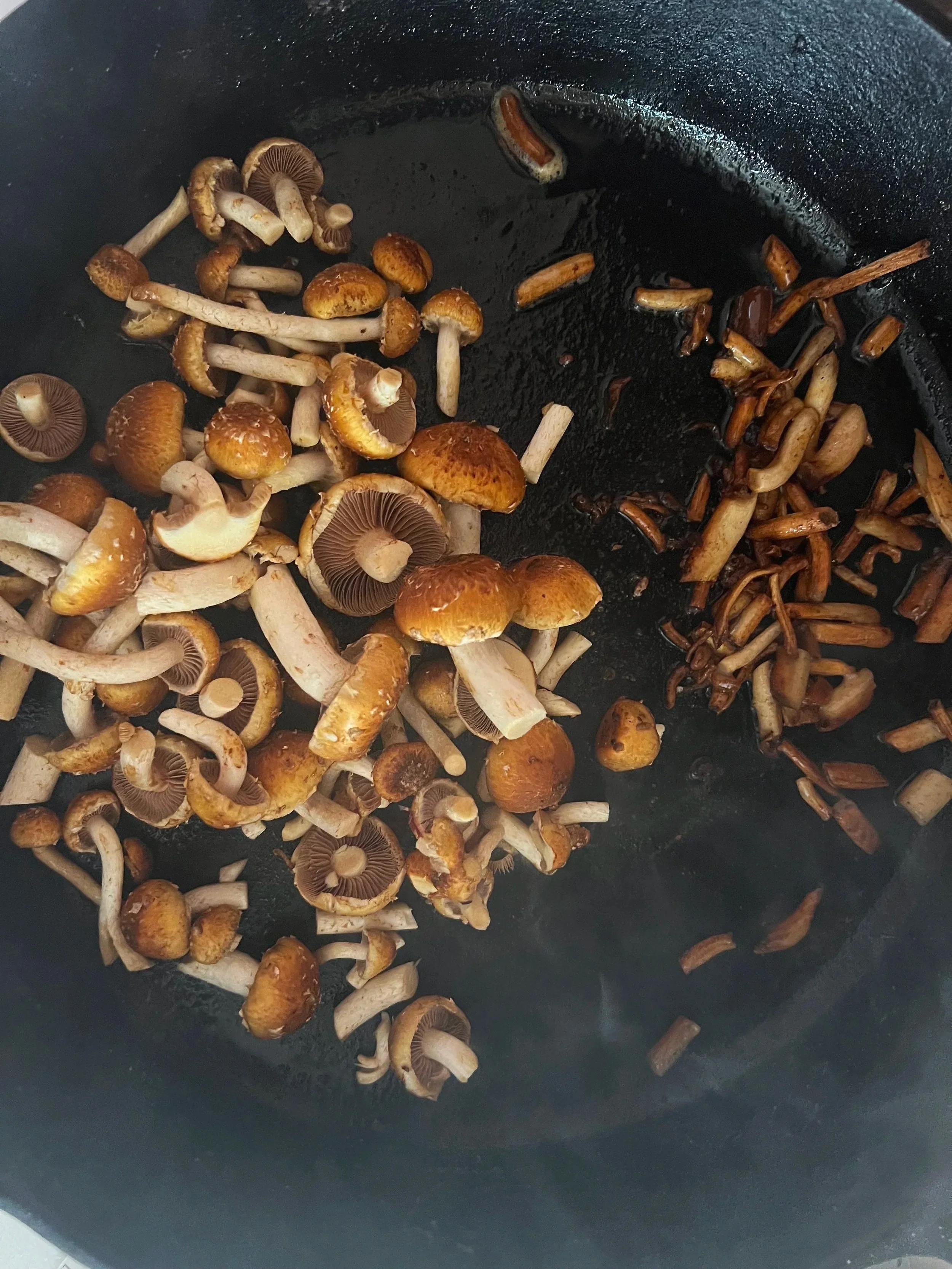
Versatile & Crispy Mushrooms
-
Recipe from: Forager | Chef
Author: Alan Bergo
-
Balsamic Pioppino Mushrooms Duxelles
Recipe from: Agrarian Feast
Author: Lucas Snobeck & Vincent Cuneo
Gluten Free, Vegetarian
-
-